Botany - Germany: how subject headings work
The catalogue has 4,239 distinct subject headings. Show them all in a filter and nobody will use it. How they become a usable “Subject” filter.
A subject heading answers the question “what is this book about?”. In our catalogue they are recorded as strings: the main topic first, then subdivisions separated by a spaced hyphen. For example, Botany - Germany — botany, subdivided by place.
4,239 variants
4,730 records have subject headings, and there are 4,239 distinct strings among them. Almost every book has its own unique combination of subdivisions. A filter with four thousand options is useless: you can’t find anything in it.
The main heading
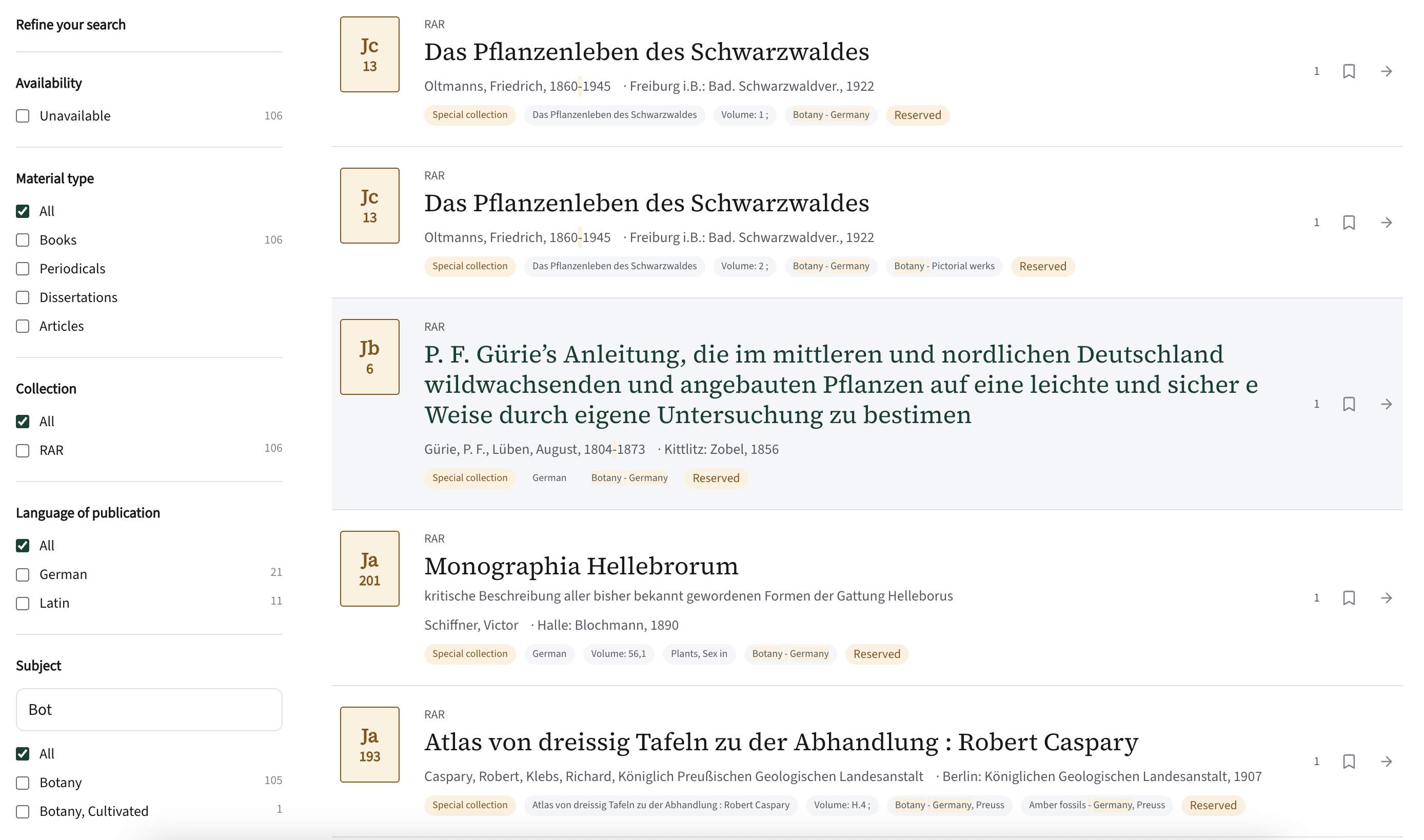
The solution is simple: show only the main heading in the filter — the part before the first “ - ”. Then Botany - Germany, Botany - Europe and plain Botany merge into one option, “Botany”. The largest main headings in the collection are Botany (almost 400 records), Plants (about 150) and Genetics (about 80).
The full strings don’t disappear. The record page shows them in full, and clicking any of them applies a filter for its main topic.
Headings from new sources
When the librarian creates a record from an ISBN, subjects arrive from the German National Library as GND terms — also as strings. The system joins them with the same “ - ” so that new records appear in the filter alongside the old ones.