Filters that don’t lie
The number next to a filter is a promise: this is how many records you will see if you select it. Why that promise is easy to break, and how we keep it.
The filters to the left of the results look like a simple part of the catalogue. In fact they hide several decisions that determine whether readers will trust them.
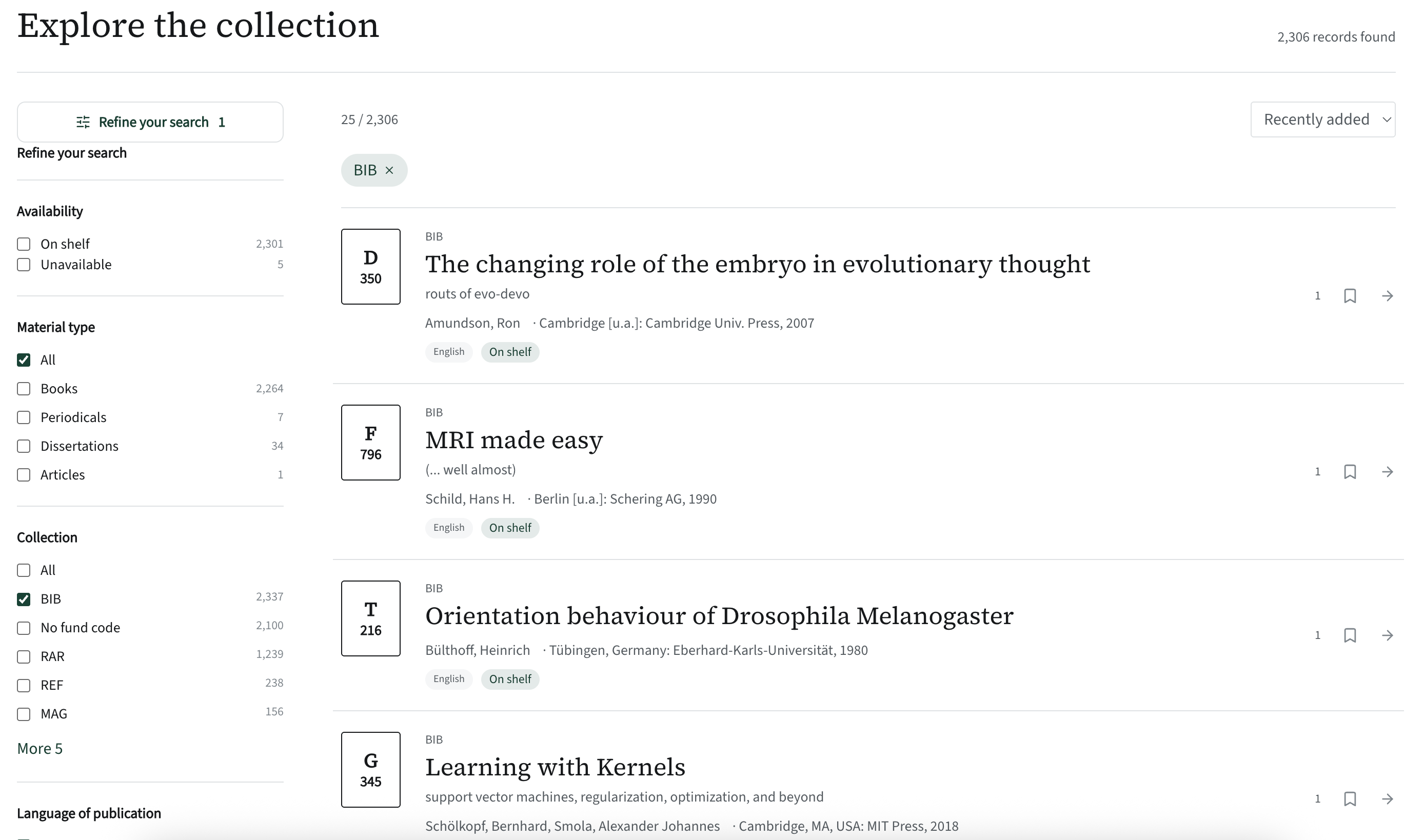
Several values in one group
A reader wants books in English and German at the same time. So within a group, values are combined with “or”, and between groups with “and”: (English or German) and main collection and the 1950s. In the first version written by the agent, each group allowed only one value.
Honest counts
The subtlest part. Say a reader selects the collection “BIB”. If you recount every group from the filtered results, the “Collection” group will contain only BIB — the other collections show zero and disappear. Adding a second collection becomes impossible.
The right way is different: for each group, count against the results with all the other filters applied, but without that group’s own filter. Then, after selecting BIB, the other collections stay in place and show how many records would be added if you selected them too.
Small things that annoy
- The “from — to” year range is applied on Enter, not on every keystroke. Otherwise, while typing “1900” the catalogue would search for 1, 19 and 190.
- Zero values don’t disappear; they fade — so the list doesn’t jump.
- Selected values are always visible, even when a group is collapsed.
- Records without a year are shown as a separate count under the histogram: they don’t vanish silently.