Searched for but not found
Every empty search result is a reader the library couldn’t help. In Katlog these queries are collected in a list. Why it matters, and why it contains not a single name.
Ordinary library statistics count what happened: loans, returns, visits. But the most interesting thing is what didn’t happen. A reader searched for something, found nothing and left.
How it works
When a catalogue search returns zero results, the system records the query itself in normalised form, how often it occurred and the date of the last occurrence. No name, no address, no account — only the text of the query. In the statistics, the librarian sees the twenty most frequent such queries, and each can be rerun in the catalogue with one click.
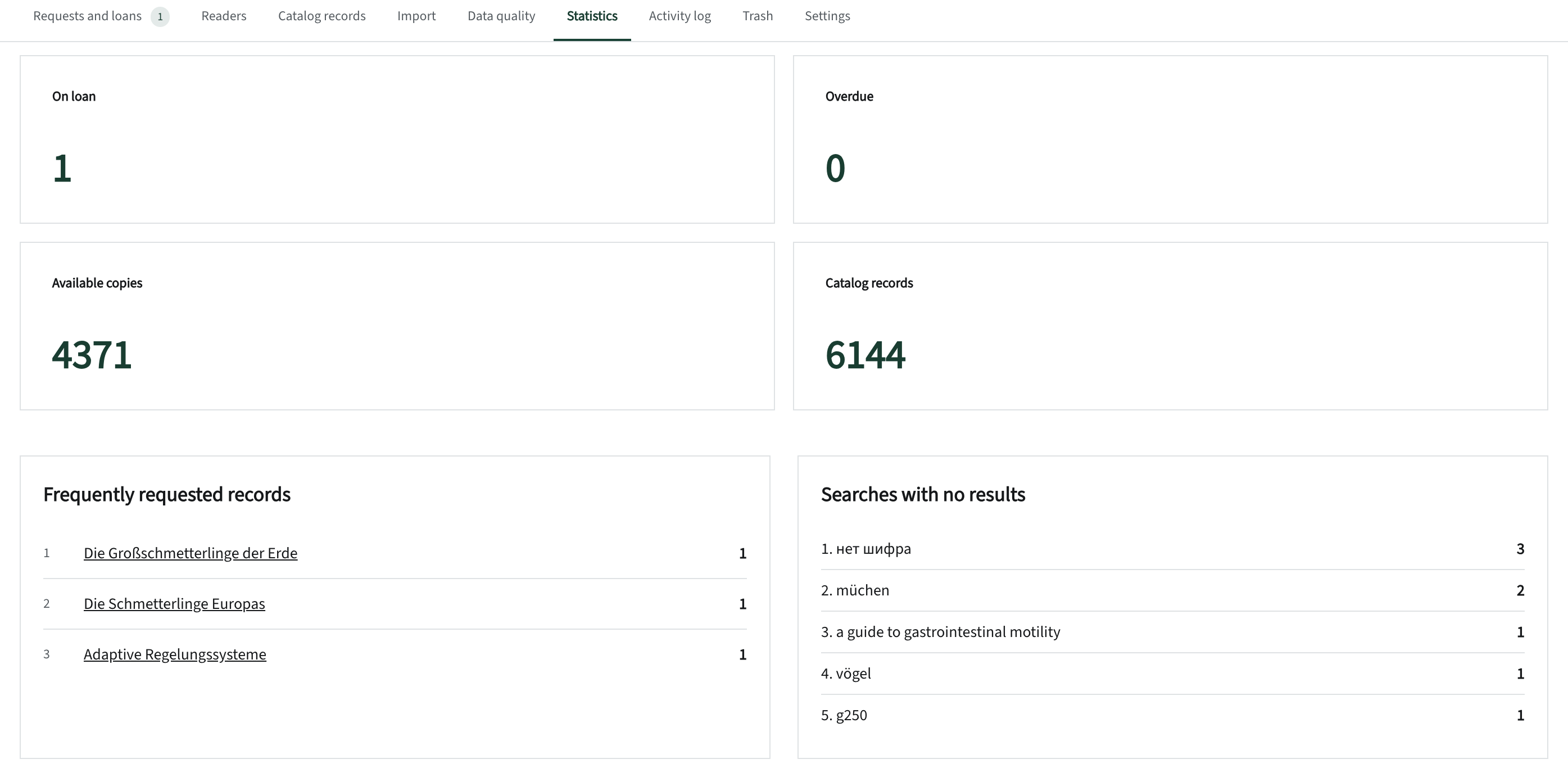
What you can learn from it
- What the collection lacks. If the same book or topic is searched for again and again, it is a candidate for purchase.
- What the records lack. The book is there but isn’t found: readers search in German while the record has only English subjects, or they search by an editor’s name that isn’t in the record.
- Where search goes wrong. Frequent typos, alternative spellings of names, abbreviations — a reason to think about synonyms.
While Katlog runs as an experiment, the list contains no queries from real readers. But the feature itself is, in our view, one of the most useful for collection development — and one of the simplest.