Delete with care: double confirmation and a trash bin
Deleting a record is the one action in the catalogue that can destroy years of work with a single click. So we made it slow. On purpose.
Most actions in the catalogue can be undone: correct a field, return a copy to the shelf, unhide a record. Deletion is different. The record goes together with its items, history and links. A mistake here costs the most.
First — perhaps don’t delete?
Most of the time deletion isn’t needed. A duplicate, a record under review, a temporarily unavailable book — all of these are handled by the “Hide” button. The record disappears from the public catalogue but stays in the system and can be brought back at any time.
If you really must delete
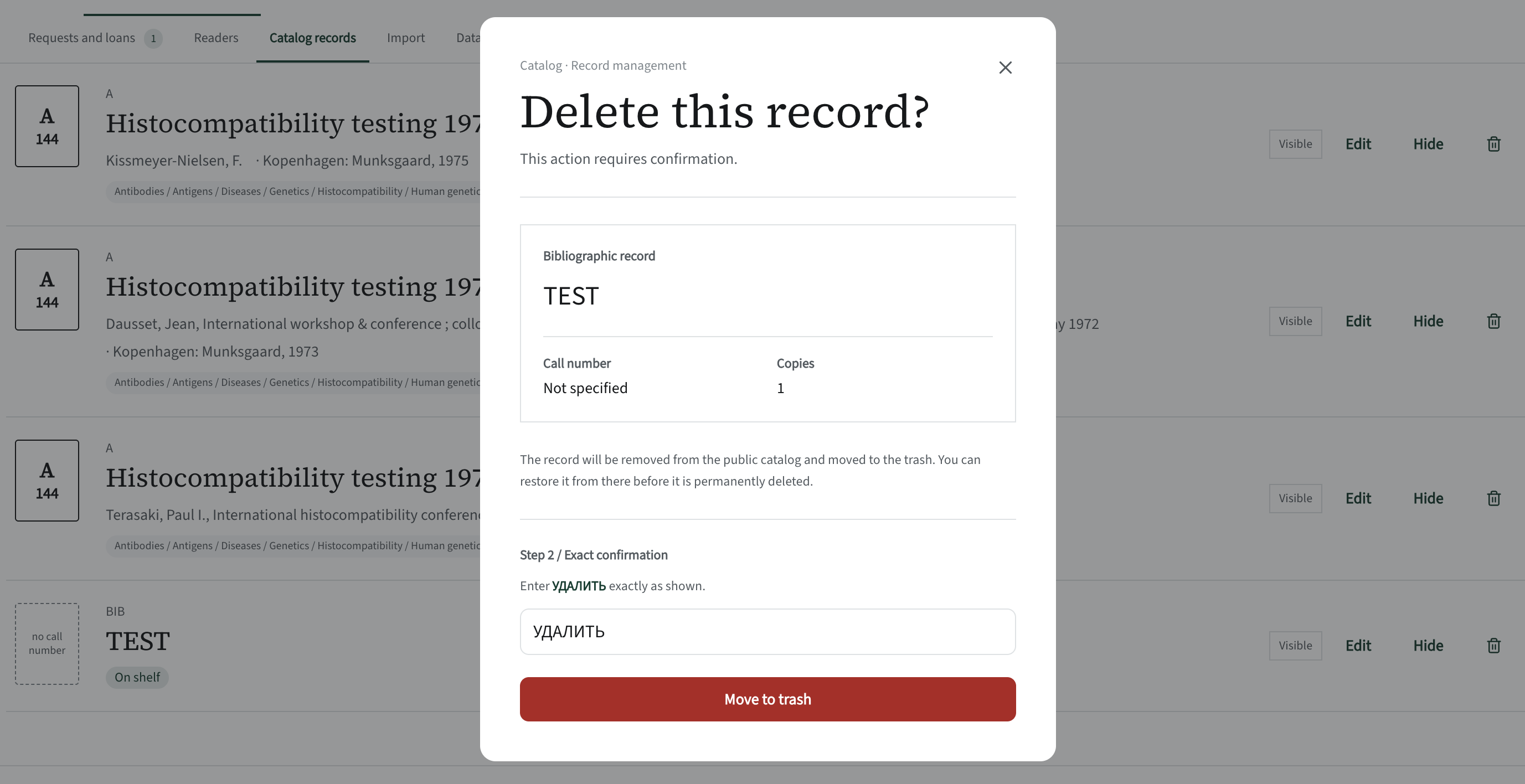
- The first dialogTitle, call number, number of copies and a warning about the consequences. The system checks whether any copy has active requests, holds or loans. If so, deletion is refused and the reason is given.
- The second dialogYou have to type the record’s call number — or the word DELETE if there is none. Only then does the button become active.
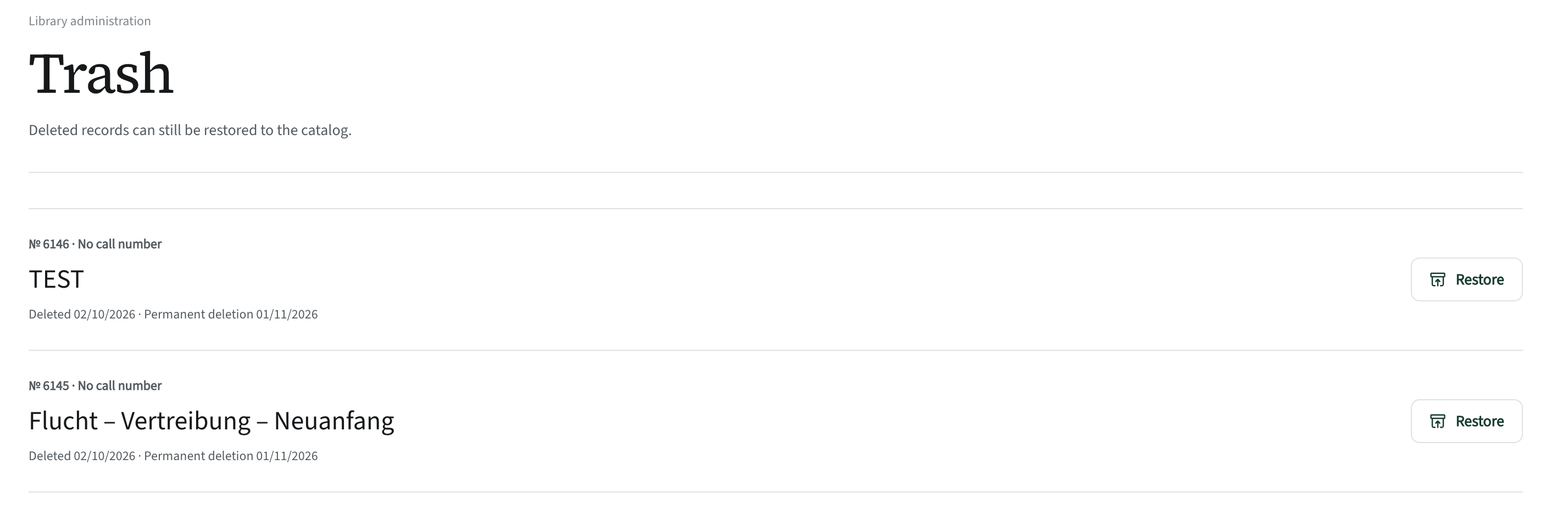
- The trashA deleted record stays in the trash for 30 days and can be restored with one click. After that it is erased for good.
Deleted means deleted
There is a trap that is easy to forget. If, six months later, you load a fresh export from the old catalogue, the deleted record will be in it again — and the import would add it as new. So the system remembers the numbers of deleted records even after the trash is emptied, and repeat imports skip them. Such a record can come back only by a deliberate decision.
And the log
Every deletion and restoration is logged: who, when, which record. If someone asks a month later where a book went, the answer will be there.