Code 02: how the system quietly closed a third of the collection
A test reader requested a book, and it turned out it couldn’t be issued: “No available copies”. The cause was two digits from Aleph — and the system deciding their meaning on its own.
This bug wasn’t found by a code review but by ordinary work. For the screenshots in this journal, a test reader requested three books and the librarian began preparing them. For the second, “Die Schmetterlinge Europas”, the preparation dialog answered: no copies available.
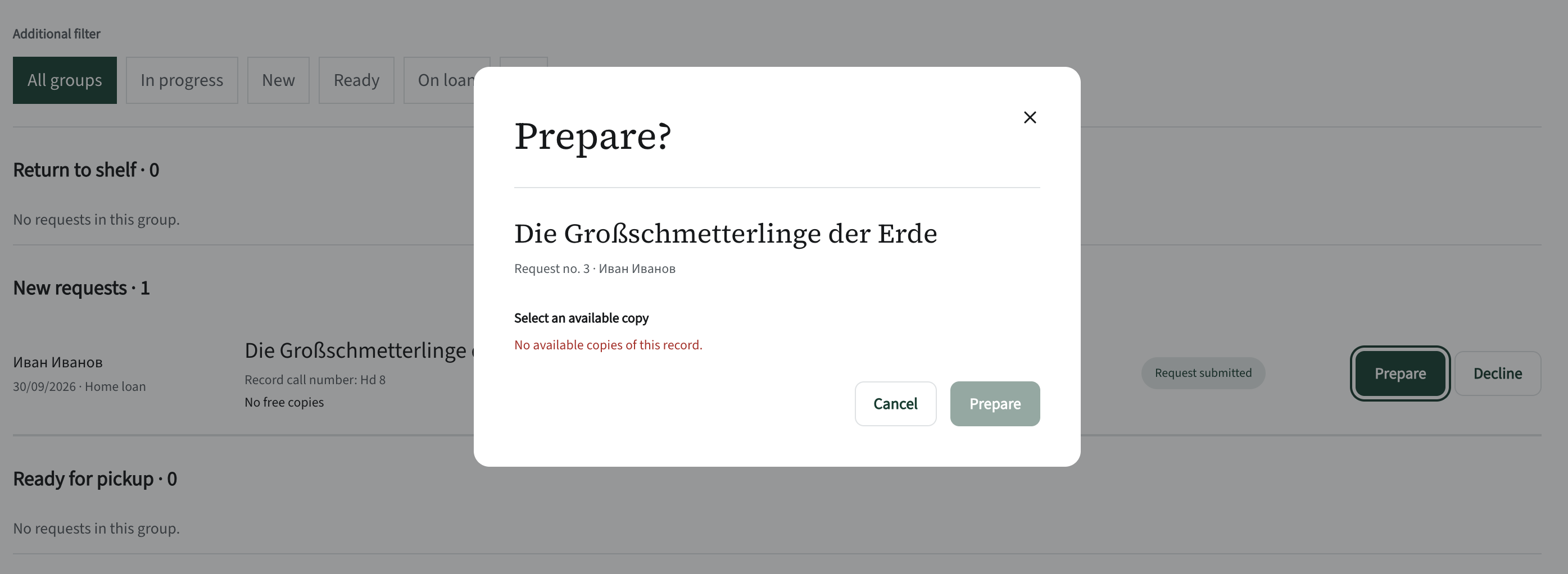
Two digits from Aleph
The copies of this book had the status code 02 in their holdings lines. We didn’t know what it means in Aleph — and agreed from the start not to guess (see “Inside Aleph”). The agent guessed: during import it read 02 as “unavailable” and marked those copies as “Reserved”.
No button broke, no message appeared. Almost a third of the collection simply became impossible to lend — while readers could still request it.
Two more guesses nearby
- The EB4 collection (235 copies) was missing from the settings: collection codes containing a digit weren’t recognised.
- Call-number letters in the “Collection” filter. For copies without a collection code, the system took the first letter of the call number — F, A, B — for a collection.
All three bugs share a pattern: where data was missing, the program filled it in by itself.
How it was fixed
- A table of status codes in the settingsFor each Aleph code — 01, 02, 04, 09 — the librarian chooses the meaning: available, reading room only, not for loan, unavailable. Until a choice is made: “available”.
- The original code is stored separatelyThe Aleph code and the Katlog circulation status are different things. Readers only see “on shelf” or “on loan”.
- An honest request formIf a book can’t go out on home loan, the “Home loan” button doesn’t appear; if it can’t be lent at all, the form says why.
- Collections recognised correctlyEB4 and EB5 found their 236 copies, and call-number letters no longer pose as collections.