LB003
Library practice2 min read
The life of a request: from request to return
Six statuses, two sides of the screen and a few forks in the road. We follow one request all the way — and look at where it can turn off.
Requesting a book seems simple: ask, receive, return. But between those steps there is waiting, holds, renewals, cancellations and forgotten books. Every such turn must be clear to both the reader and the librarian.
Six statuses
Requestedthe reader has requested the book
Ready for pickupa copy is on hold until a date
On loanissued, with a due date
Returnedback on the shelf
Cancelledby the reader, or when a hold expires
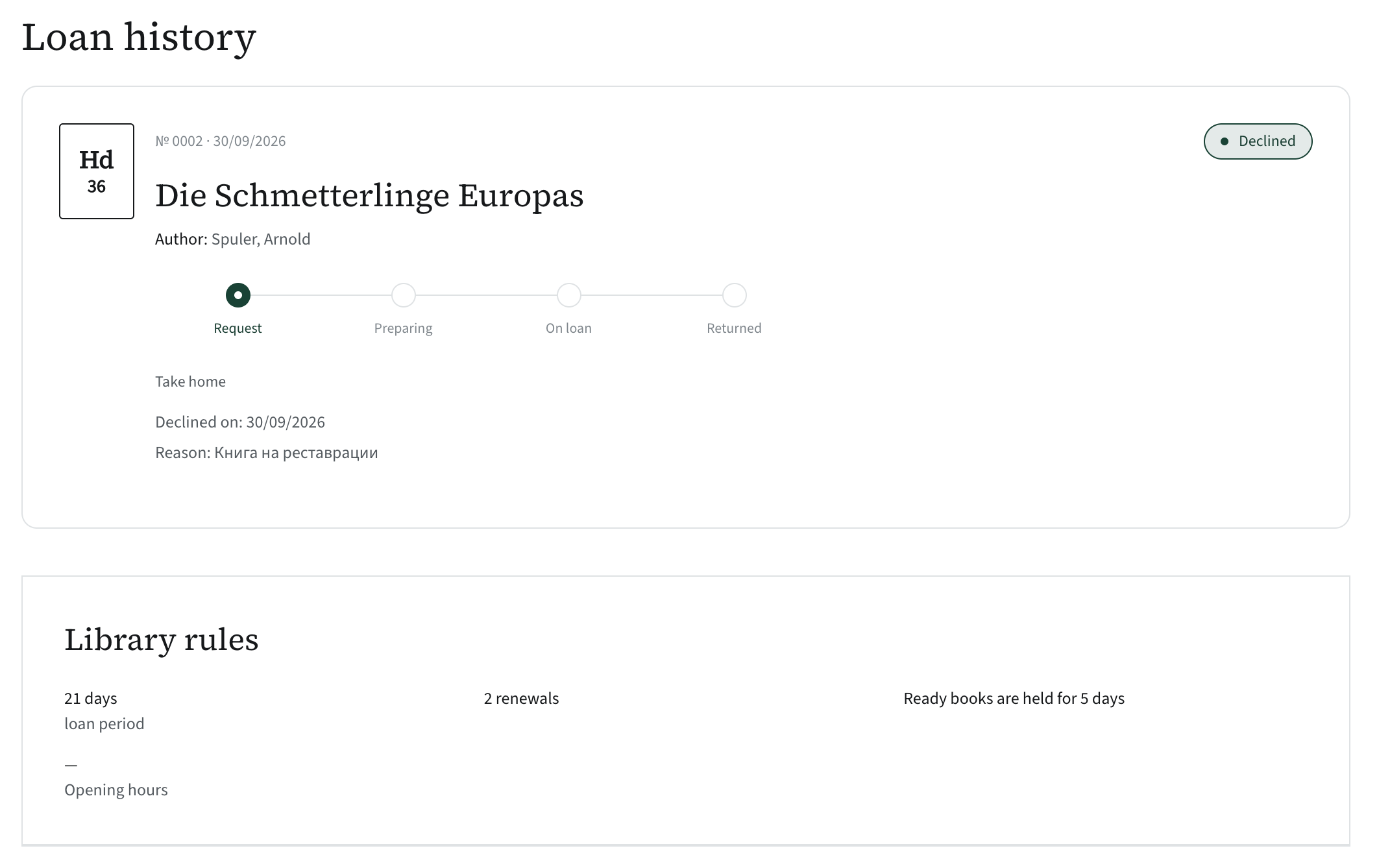
Declinedby the librarian, with a reason
The usual path
- RequestThe reader opens the record, chooses “home loan” or “reading room” and clicks “Request”. If no copy is free, the request is still accepted and waits.
- PreparationThe librarian picks a suitable copy and sets it aside. The copy is marked “On hold”; the reader sees “Ready for pickup” and a “Pick up by…” date.
- IssueThe reader arrives and the librarian clicks “Issue”. A due date appears: for home loans according to the library’s rules, for the reading room by the end of the day.
- Return“Check in” — the copy is back on the shelf, and the request moves into the reader’s history.
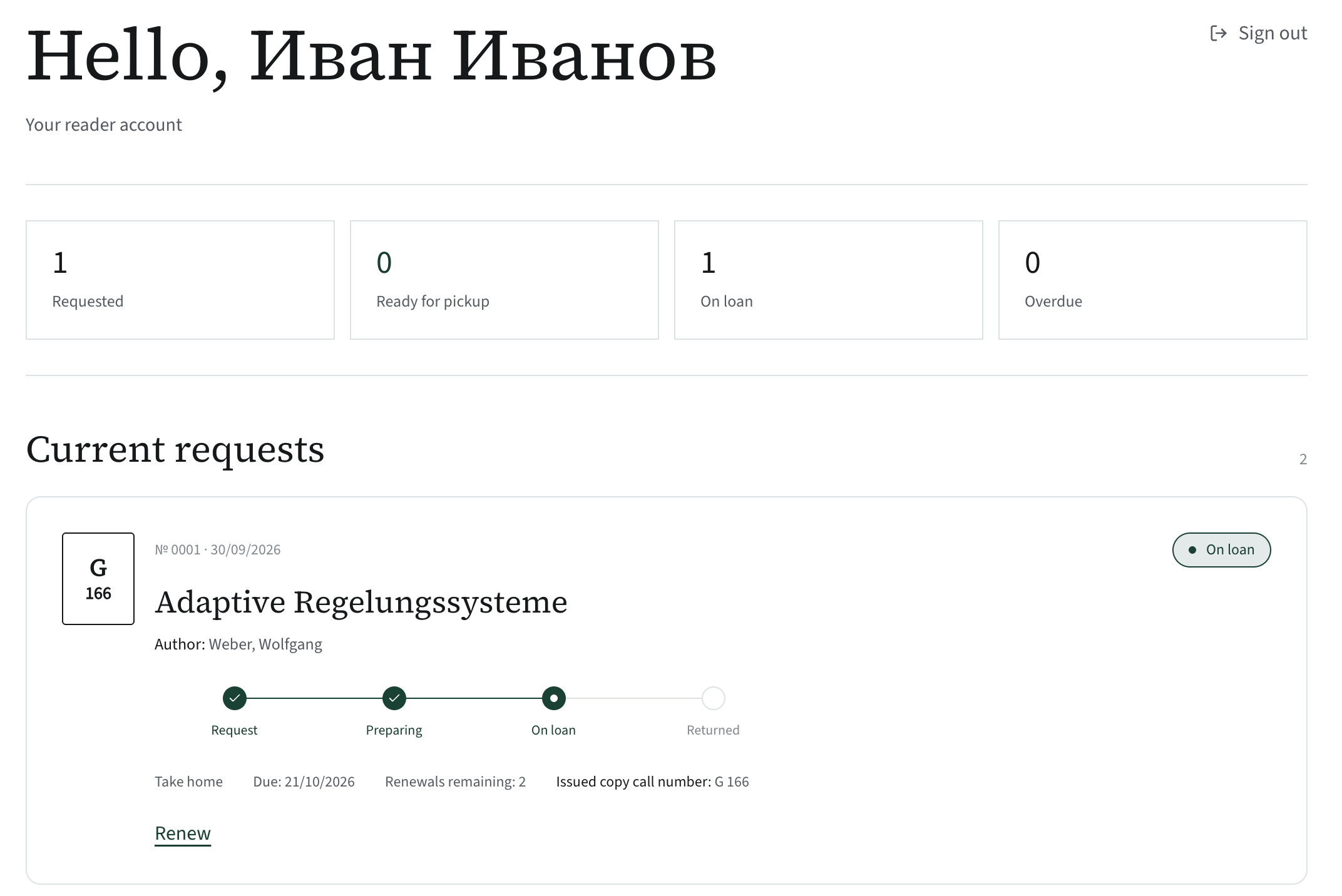
Forks in the road
- The reader changes their mind. They can cancel until the book is issued. If a copy has already been set aside, it appears for the librarian under “Return to shelf”.
- The reader doesn’t come. The hold expires, the row turns red, and the librarian clicks “Release hold”. The request is cancelled with the reason “Hold expired”.
- The book can’t be lent. The librarian declines the request and gives a reason — the reader will see it.
- More time is needed. The reader renews the book, as long as it isn’t overdue and renewals remain. The librarian can renew it too.
- The due date passes. The loan turns red for both: the reader’s “Overdue” counter, and a row at the top of the librarian’s list.
Who sees whatOther readers only see the status of a copy — “on shelf” or “on loan”. Only the reader and the librarian know who has the book.